RESTORATIVE DENTISTRY
All-on-4 Dental Implants in Glendale, CA
A Full Arch of Fixed Teeth on Four Implants
All-on-4 replaces an entire arch of missing or failing teeth with a fixed bridge secured onto four titanium implants. Unlike a conventional denture, nothing rests on your gums and nothing comes out at night. The bridge is screwed into place and only your dentist removes it.
You may also see this treatment called full mouth dental implants, full arch implants, permanent teeth, or teeth in a day. Those names all describe the same idea: replacing a whole arch at once rather than one tooth at a time. If you are replacing both the upper and lower jaw, that is usually described as full mouth dental implants; a single jaw is a full arch.
The technique works by angling the two rear implants so they anchor into the denser bone toward the front of the jaw. That single design decision is why All-on-4 is often possible for patients who have already been told they do not have enough bone for conventional dental implants, and why it frequently avoids the sinus lifts and extensive grafting those cases would otherwise require.
At Glendale Dental Wellness, full-arch planning starts with a 3D CBCT scan so Dr. Chan can measure your actual bone volume and locate the nerves and sinuses before anything is decided. You leave the consultation with a written treatment plan and a real number, not an estimate over the phone.
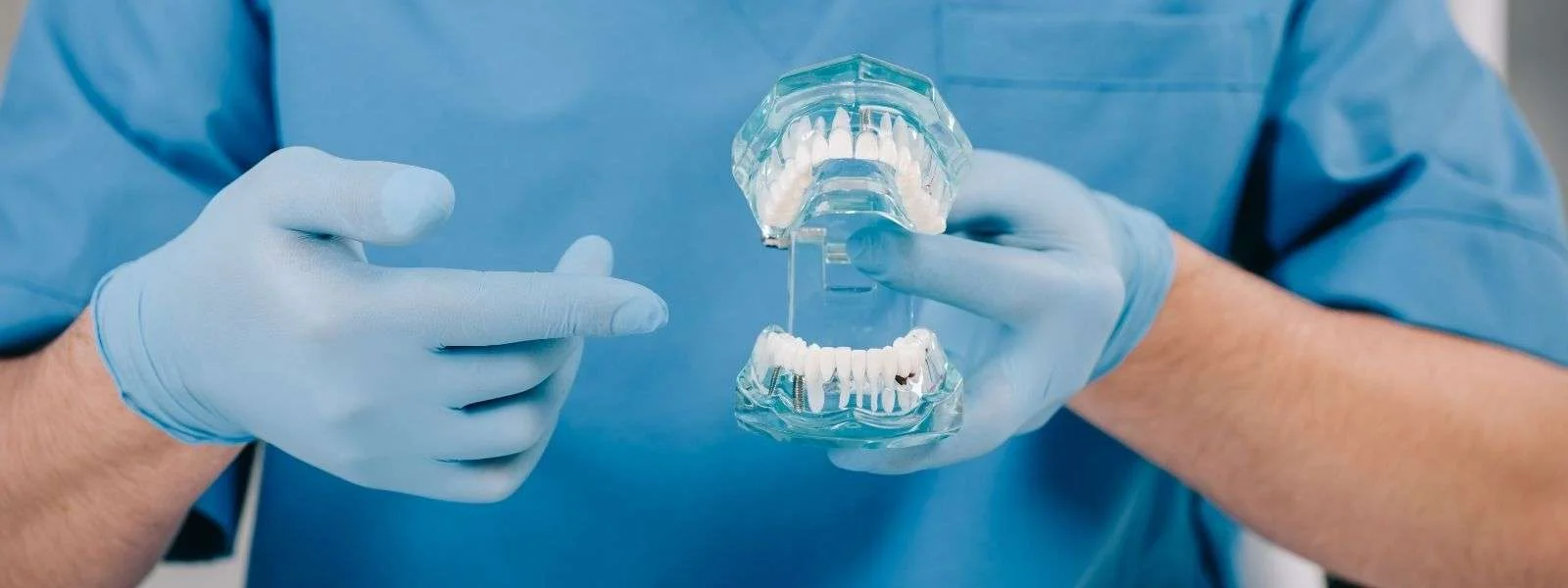
All-on-4 Compared With a Conventional Denture
A conventional denture rests on the gums. It moves when you chew, it usually needs adhesive, and the upper plate covers the roof of your mouth, which is where much of your sense of taste lives. Because nothing is anchored into the jaw, the bone underneath slowly resorbs, so a denture that fit well last year fits worse this year and eventually needs relining or remaking.
All-on-4 transmits chewing force into the jawbone through the implants, which is what helps preserve bone in the same way a natural tooth root does. The practical differences patients notice most:
- It stays in: no adhesive, no movement, nothing removed at night
- The palate stays open: upper arch bridges do not cover the roof of the mouth, so food tastes normal
- Bite strength is closer to natural teeth: conventional dentures deliver a fraction of natural chewing force
- Bone is far more likely to be preserved: the implants stimulate the jaw, which helps maintain facial structure
- Cleaning is closer to normal: brushing plus a water flosser, rather than soaking overnight
Where a conventional denture wins is upfront cost and speed. If you need teeth quickly and the budget is fixed, a denture or partial is a legitimate answer and we will say so. An implant-supported denture sits between the two, clipping onto two to four implants for far more stability than a conventional plate at a lower cost than a fixed bridge.
What Affects the Cost of All-on-4
Full-arch treatment is priced case by case, and that is the honest reason no responsible practice quotes it over the phone. Two people can both need a single arch restored and end up with quite different plans once the scan has been read. Dr. Chan builds your figure after a comprehensive exam and a 3D CBCT scan, and you receive it in writing before anything is scheduled.
These are the variables that move the number:
- How many teeth still need removing. Failing teeth in the arch are extracted before the implants go in, and that work is charged separately from the implants themselves.
- How much bone you have. The angled-implant technique exists partly to avoid grafting, but some cases still need a bone graft at one or more sites.
- Which material you choose for the bridge. Zirconia costs more than acrylic on a titanium frame, and generally resists staining and wear better over time.
- One arch or both. Treating the upper and lower together is more clinical work, but it is normally priced below two separate single-arch cases. If you are considering both, start with full mouth dental implants instead.
- Whether anything needs treating first. Active gum disease is stabilised before implants are placed, because implants do not do well in inflamed tissue. LANAP laser gum treatment is one of the ways that is handled here.
- Sedation. Most placements need only local anaesthetic. Nitrous oxide sedation is available for anxious patients and is billed as an addition.
How to get an accurate figure for your case
Glendale Dental Wellness offers a complimentary dental implant consultation, covering function, aesthetics, timelines and budget with Dr. Chan. There is no obligation to book treatment on the day.
If you would rather see indicative numbers before coming in, our main dental implants page publishes typical Los Angeles-area ranges for each type of implant treatment. Those are clearly marked as market orientation rather than a quote from this practice, for exactly the reason described above.
Ways patients pay for full-arch treatment
- PPO insurance. We accept all PPO plans and handle the paperwork. Full-arch work is rarely covered in full, but many plans contribute toward extractions or part of the prosthesis. Your benefits are verified before treatment begins.
- CareCredit financing. Monthly payment plans, with 0% and low-interest options depending on the amount financed and your credit. Applying does not commit you to treatment.
- In-house membership plan. No insurance? Our membership plan bundles preventive care for a flat annual fee and includes a discount on further treatment, along with the hygiene visits implants need afterwards.
Our insurance and financing page explains each of these in more detail.
Ready to find out what your case involves? Call 818-243-3838 or request an appointment online. We are open Monday to Thursday, 8:00 AM to 5:00 PM.
All-on-4, All-on-6 and All-on-X: What the Numbers Mean
These are not three different procedures. They are three names for the same approach, and the number simply refers to how many implants carry the arch. Which one is right for you is decided by your jawbone, not by marketing.
All-on-4
Four implants per arch, with the two rear implants tilted so they anchor into the denser bone toward the front of the jaw. All-on-4 is a trademarked protocol originally developed by Nobel Biocare. It is the most widely used approach and frequently works in cases where conventional implants would have needed grafting first.
All-on-6
Six implants per arch instead of four. Considered when there is enough bone volume to place them and when bite forces are heavier, for example in patients who grind their teeth. The extra support is also sometimes preferred on the upper jaw, where bone is generally softer than in the lower.
All-on-X
A generic term rather than a brand name. The X stands for whatever number your anatomy actually calls for, most often four, five or six. Practices and dental laboratories frequently use All-on-X precisely because All-on-4 is a registered trademark and cannot be used freely.
More implants is not automatically better. An implant can only go where there is bone to hold it. Placing six where four would have carried the arch adds cost, surgical time and healing without adding function. Equally, four is not a shortcut. The right number comes out of the 3D scan, and Dr. Chan will explain why yours is what it is before you commit to anything.
Your Full-Arch Options Compared
Fixed implants are not the only answer and they are not right for everyone. These are the three realistic routes when most or all of the teeth in an arch need replacing.
| All-on-4 / All-on-6 fixed bridge | Implant-supported denture | Conventional denture | |
|---|---|---|---|
| Also called | Permanent teeth, fixed full arch, teeth in a day | Snap-in dentures, overdenture, dentures on implants | Full denture, plate, false teeth |
| Implants needed | 4 to 6 per arch | 2 to 4 per arch | None |
| Removable | No. Only your dentist removes it | Yes. You unclip it to clean | Yes |
| Adhesive | Never | Not needed | Usually |
| Covers the palate | No | Reduced, often horseshoe shaped | Yes on the upper arch |
| Chewing strength | Closest to natural teeth | Much better than conventional | A fraction of natural |
| Effect on jawbone | Helps preserve bone | Helps preserve bone around the implants | Bone continues to shrink |
| Cleaning | Brush, water flosser and a threader under the bridge | Unclip and clean, like a denture | Remove and soak |
| Relative cost | Highest upfront | Mid range | Lowest upfront, highest ongoing |
| Usually suits | People who want teeth that never come out and never move | People who want big stability gains at a lower cost | People who need a fast, low-cost option now |
If cost rules out a fixed arch today, an implant-supported denture is a genuine middle path rather than a consolation prize. It removes the adhesive and most of the movement for a fraction of the price, and the implants placed for it can often be built on later. We would rather talk you through that honestly than sell you the most expensive option in the room. You can also read more about dentures and partials or single and multiple tooth implants.
The All-on-4 Process, Step by Step
Most full-arch cases move through six stages over several months. You will have a written plan and a firm price before any treatment begins.
1. Consultation and 3D Scan
Dr. Chan examines your remaining teeth and takes a 3D CBCT scan to measure bone volume and locate the nerves and sinuses. This is what determines whether All-on-4 is possible for you.
2. Treatment Plan and Quote
You receive a written plan with the full cost, what your insurance is likely to contribute, and monthly financing options. Nothing is scheduled until that plan is in your hands.
3. Extractions and Placement
Any remaining failing teeth are removed and the four implants are placed in the same visit. Nitrous oxide sedation is available if you would prefer to be more relaxed.
4. Temporary Fixed Bridge
Where the bone and the stability of the placed implants allow it, a temporary bridge can be attached at the same visit so you are not left without teeth. It is designed to look natural and to let you manage a soft diet while healing progresses. This is confirmed during treatment planning rather than assumed.
5. Healing and Integration
Over roughly three to six months the implants fuse with the jawbone. You are seen at intervals during this period so healing and bite are checked as they progress.
6. Your Final Bridge
Once integration is confirmed, the permanent bridge is fitted, matched to your face, your bite and the shade you choose. This is the set you keep.
Candidacy and Living With All-on-4
Full-arch treatment is not right for everyone, and the honest answer only comes after a scan. These are the factors that matter most:
All-on-4 replaces a complete upper or lower arch. If only one or two teeth are missing, a single implant or an implant bridge is the better answer.
Denture wearers are the most common full-arch candidates, because they already know exactly what problem they want solved.
When gum disease treatment can still save the teeth, that is always the first option. When it has gone too far, full-arch replacement becomes the realistic path.
The angled rear implants make use of denser bone at the front of the jaw. Many patients declined for conventional implants are still candidates here.
Uncontrolled diabetes, certain bone medications and heavy smoking all affect healing and implant success, and need discussing openly before treatment.
Tobacco slows healing and increases the chance of implant failure. Stopping before and after treatment measurably improves your odds.
Brushing, a water flosser and a threader to clean under the bridge, about two minutes a day. Neglect leads to gum inflammation around the implants.
Professional checkups and cleanings let Dr. Chan check the fit, the bite and the health of the tissue around each implant.
Frequently Asked Questions
Will I leave with teeth the same day?
Often, but it is not automatic and you should not assume it before your scan. Attaching a temporary fixed bridge at the same visit is a routine part of many full-arch protocols, which is why the treatment is sometimes marketed as teeth in a day. Whether it is appropriate for you depends on how much bone you have and how stable the implants are once placed. Dr. Chan will tell you what is realistic after reviewing your 3D scan, rather than promising it in advance. Your permanent bridge is fitted later, once the implants have fused with the bone.
What if I have been told I do not have enough bone for implants?
This is one of the main reasons the All-on-4 technique exists. The two rear implants are placed at an angle so they anchor into the denser bone toward the front of the jaw, which often avoids the need for a sinus lift or extensive grafting. Many patients who were turned down for conventional implants are candidates for All-on-4. A 3D CBCT scan gives the definitive answer.
How is All-on-4 different from an implant-supported denture?
An All-on-4 bridge is fixed. It is screwed onto the implants and only your dentist removes it. An implant-supported denture, sometimes called a snap-in denture, clips onto two to four implants and you take it out yourself for cleaning. The denture option costs less and is easier to clean, while the fixed bridge feels closer to natural teeth. Both are discussed at your consultation.
Does the procedure hurt?
The placement is performed under local anesthetic, and nitrous oxide sedation is available if you would prefer to be more relaxed. Most patients describe the following days as soreness and swelling rather than sharp pain, managed with prescribed medication. Almost everyone tells us afterward that it was less difficult than they had imagined.
How long do All-on-4 implants last?
The titanium implants themselves are designed to be permanent and frequently last decades with good care. The bridge attached to them is a replaceable component and may need refurbishment or replacement over the years, in the same way a natural tooth may eventually need a new crown. Regular hygiene visits are the single biggest factor in long-term success.
How do I clean a fixed full-arch bridge?
You brush it like natural teeth, then use a water flosser and a floss threader to clean underneath the bridge where it meets the gum. It takes a couple of minutes a day. We demonstrate the routine at your fitting appointment and check the fit and cleanliness at every recall visit.
Is All-on-6 better than All-on-4?
Not automatically. More implants means more support, which can matter if you have heavy bite forces, if you grind your teeth, or if we are treating the upper jaw where bone tends to be softer than the lower. But implants can only go where there is bone to hold them. Placing six where four would have done adds cost and surgical time without adding benefit. The 3D scan decides this, not a preference.
Does insurance cover All-on-4?
Rarely in full. Most PPO plans treat full-arch implant work as a major restorative procedure and contribute toward part of it, commonly the extractions or the prosthesis rather than the implants themselves. Annual maximums also cap what any plan will pay in a single year. We verify your specific benefits in writing before treatment begins so you know the real number, not an estimate.
Am I too old for All-on-4?
Age on its own is rarely the deciding factor. Bone volume, general health and any medications you take matter far more. If All-on-4 is not appropriate for your case, we will say so directly and talk you through the alternatives, including implant-supported dentures and conventional dentures.