- Why Teeth Lose Their Brightness
- In-Office Zoom Whitening: The Fastest Route
- Custom Take-Home Trays: Gradual and Flexible
- How to Choose Between Them
- Why Professional Whitening Beats Drugstore Kits
- Managing Sensitivity During Whitening
- What Whitening Cannot Fix
- Making Your Results Last
- Book Your Summer Whitening Consultation in Glendale
Late summer brings the last round of weddings, reunions, and end of season events, and with them the photos that outlast the season. A brighter smile is the fastest, most affordable cosmetic change most people can make, which is why whitening is consistently the most requested treatment at our practice. But patients almost always arrive with the same question: is it better to whiten in the office or at home? At Glendale Dental Wellness, Dr. Ivan Chan offers both to patients across Glendale, Burbank, Pasadena, Eagle Rock, and La Crescenta. Here is an honest comparison so you can pick the right one.
Why Teeth Lose Their Brightness
Staining happens in two ways. Extrinsic stains sit on the enamel surface and come from coffee, tea, red wine, dark sodas, berries, and tobacco. These respond well to whitening. Intrinsic discoloration sits deeper in the tooth and comes from aging, certain medications, trauma, or excess fluoride during childhood. These are more stubborn and sometimes call for a different approach entirely. Part of what you get from a professional consultation is an accurate read on which kind of discoloration you actually have, which determines how much change is realistic.
In-Office Zoom Whitening: The Fastest Route
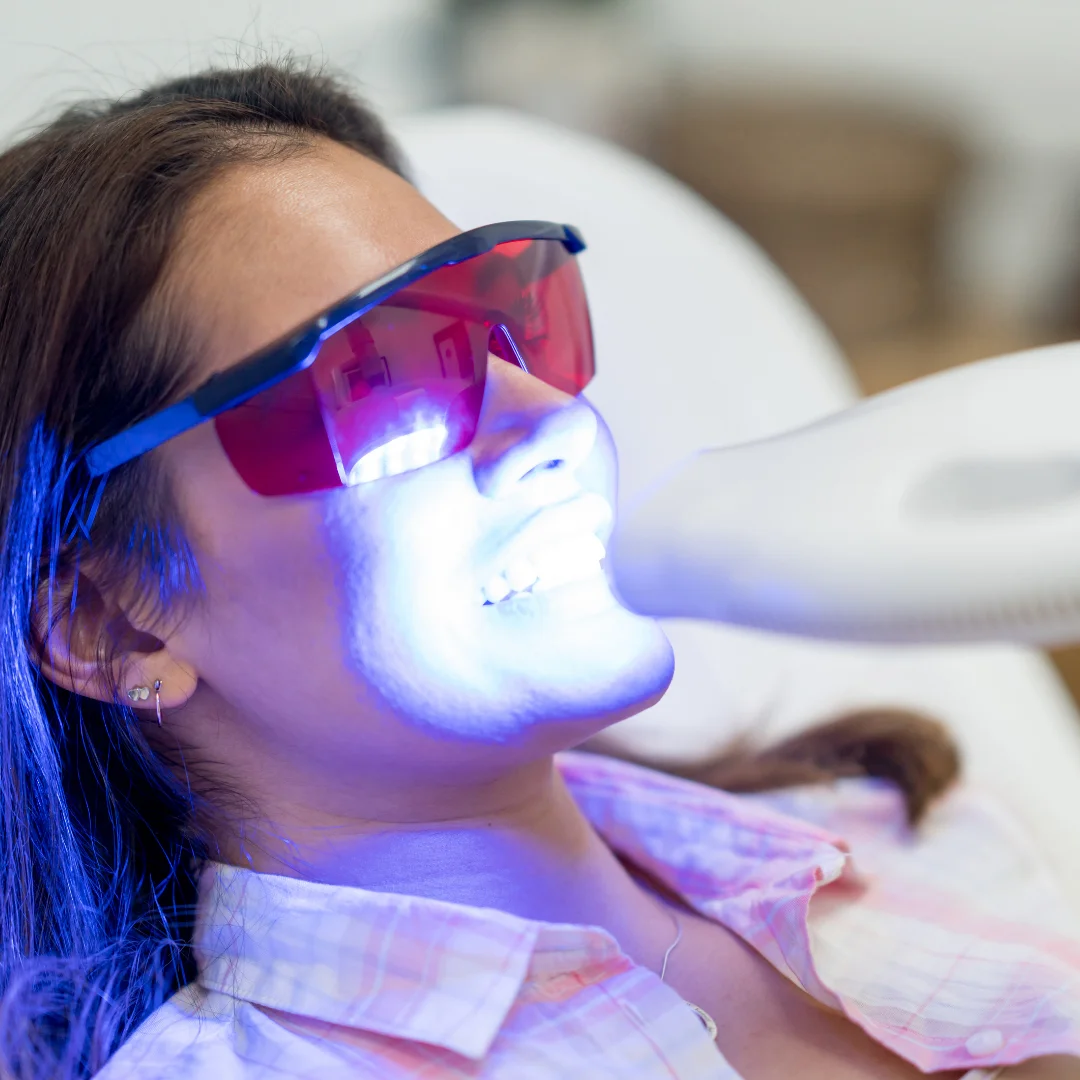
If you have an event on the calendar and limited time, Zoom teeth whitening is the most direct path. The appointment takes about ninety minutes. Your gums and lips are protected, a professional strength hydrogen peroxide gel is applied, and a specialized light activates it across several short sessions in the same visit. Most patients leave several shades brighter than they arrived. Because the entire process happens under Dr. Chan's supervision, the gel concentration is higher than anything you can use unsupervised, and soft tissue stays protected throughout.
Custom Take-Home Trays: Gradual and Flexible
Take-home whitening uses the same professional grade chemistry at a lower concentration, delivered in trays custom molded to your teeth. You wear them for a set period each day over roughly two weeks. The custom fit is what separates this from a drugstore kit: the tray holds gel evenly against every surface and keeps it off your gums, which is where most at home irritation comes from. Take-home whitening suits patients who prefer to go slowly, who have had sensitivity in the past, or who simply cannot spare an afternoon. It also leaves you with trays you can use for periodic touch ups for years.
How to Choose Between Them
The decision usually comes down to three things. If your event is within a week or two, choose in-office. If you have four weeks or more and want to control the pace, choose take-home. If you have a history of sensitive teeth, take-home lets you spread exposure out and pause whenever you need to. And if you want the most dramatic result available, many patients combine the two, starting with an in-office session to make a large jump and then using take-home trays to fine tune and maintain it. Dr. Chan will recommend an approach after looking at your teeth, not before.
Ready to schedule your appointment? Call us at (818) 243-3838 or request an appointment online.
Why Professional Whitening Beats Drugstore Kits
Over the counter strips and trays are cheaper, and for very mild surface staining they can produce a modest change. The limitations show up quickly. One size trays leak gel onto the gums, strips do not conform to the curves between teeth, and the low concentrations legally available without supervision cannot reach deeper staining. More concerning are the viral at home methods involving charcoal, baking soda scrubs, or acidic fruit, which strip enamel permanently in exchange for a temporary brightness. We covered the specific risks in our post on DIY whitening treatments that can damage your teeth. Enamel does not grow back.
Managing Sensitivity During Whitening
Temporary sensitivity is the most common side effect of any whitening, and it is usually mild and short lived. It happens because the gel opens the microscopic tubules in dentin during treatment. There is a lot we can do about it. Dr. Chan may recommend a desensitizing toothpaste for a week or two beforehand, apply a fluoride treatment after your session, adjust the gel concentration, or shorten daily wear time with take-home trays. If sensitivity has kept you from whitening before, tell us at your consultation, because it is a manageable problem rather than a disqualifying one.
What Whitening Cannot Fix
It is worth being clear about the limits. Whitening only changes the shade of natural enamel. It has no effect on porcelain veneers, crowns, bridges, or tooth colored fillings, which keep whatever shade they were made. If you have visible restorations on your front teeth, the usual sequence is to whiten first, let the shade stabilize for about two weeks, then match any new cosmetic work to your brighter result. Whitening also will not correct chips, gaps, or worn edges. For those, a broader smile makeover that combines whitening with bonding or veneers is the better plan.
Making Your Results Last
Professional whitening typically holds for one to three years, and the range depends almost entirely on habits. Coffee, tea, red wine, and dark sodas are the main culprits, and drinking them through a straw and rinsing with water afterward makes a measurable difference. Tobacco will undo results faster than anything else. Regular professional cleanings remove the surface staining that accumulates between visits, and a short touch up with your take-home trays once or twice a year keeps your shade where you want it without repeating the full treatment.
Book Your Summer Whitening Consultation in Glendale
Whether you have a week before a big event or a month to take your time, Dr. Ivan Chan can help you choose the whitening approach that fits your timeline and your teeth. Explore our full range of teeth whitening and cosmetic dentistry options, and ask about flexible financing if you are planning a larger transformation. We welcome patients from Glendale, Burbank, Pasadena, La Crescenta, Eagle Rock, and Los Feliz. Call (818) 243-3838 or request your consultation online.
Frequently Asked Questions
How many shades whiter will my teeth get?
Most patients see a jump of several shades, but the exact result depends on your starting shade and whether your discoloration is surface staining or deeper intrinsic discoloration. Dr. Chan will give you a realistic expectation at your consultation rather than a generic promise.
Is in-office or take-home whitening better?
Neither is universally better. In-office Zoom whitening delivers the fastest result in a single ninety minute visit and suits a tight timeline. Custom take-home trays work gradually over about two weeks and give you more control over sensitivity. Many patients combine both for the strongest result.
How long does professional teeth whitening last?
Typically one to three years, depending on your habits. Coffee, tea, red wine, dark sodas, and tobacco shorten that considerably. Regular cleanings and occasional touch ups with your take-home trays keep results looking fresh far longer.
Does teeth whitening hurt?
Some temporary sensitivity is common but usually mild and short lived. Dr. Chan can reduce it with a desensitizing toothpaste beforehand, a fluoride treatment afterward, or an adjusted gel concentration. If sensitivity has stopped you from whitening before, tell us and we will build the plan around it.
Will whitening work on my crowns or veneers?
No. Whitening only changes the shade of natural tooth enamel. Crowns, veneers, bridges, and tooth colored fillings keep the shade they were made. If you have visible restorations, we usually whiten first and then match any new cosmetic work to your brighter shade.
Are drugstore whitening strips safe to use?
Strips are generally safe when used as directed, but they are far less effective than professional whitening because of low gel concentrations and poor fit. The real danger is DIY methods using charcoal, baking soda scrubs, or acidic fruit, which permanently erode enamel that does not grow back.
Related Articles

Services You Should Expect From Any Prospective Cosmetic Dentist In Your Area
Are you currently on the search for a local Glendale, California area cosmetic dentist. When choosing a cosmetic dentist, there are many factors that...
Read More
5 Great Tips for Choosing the Best Cosmetic Dentist
Let's say you've decided to get cosmetic dental work for your smile. Furthermore, you already have an idea of the treatment you want
Read More
Does It Hurt to Get Cosmetic Dental Work Done?
If you're not happy with how your smile looks, cosmetic dentistry can help. Whether you have a noticeable stain, crooked teeth, or a "gummy" looking s...
Read More